Frosted Film vs Privacy Tint for Front Doors & Sidelights
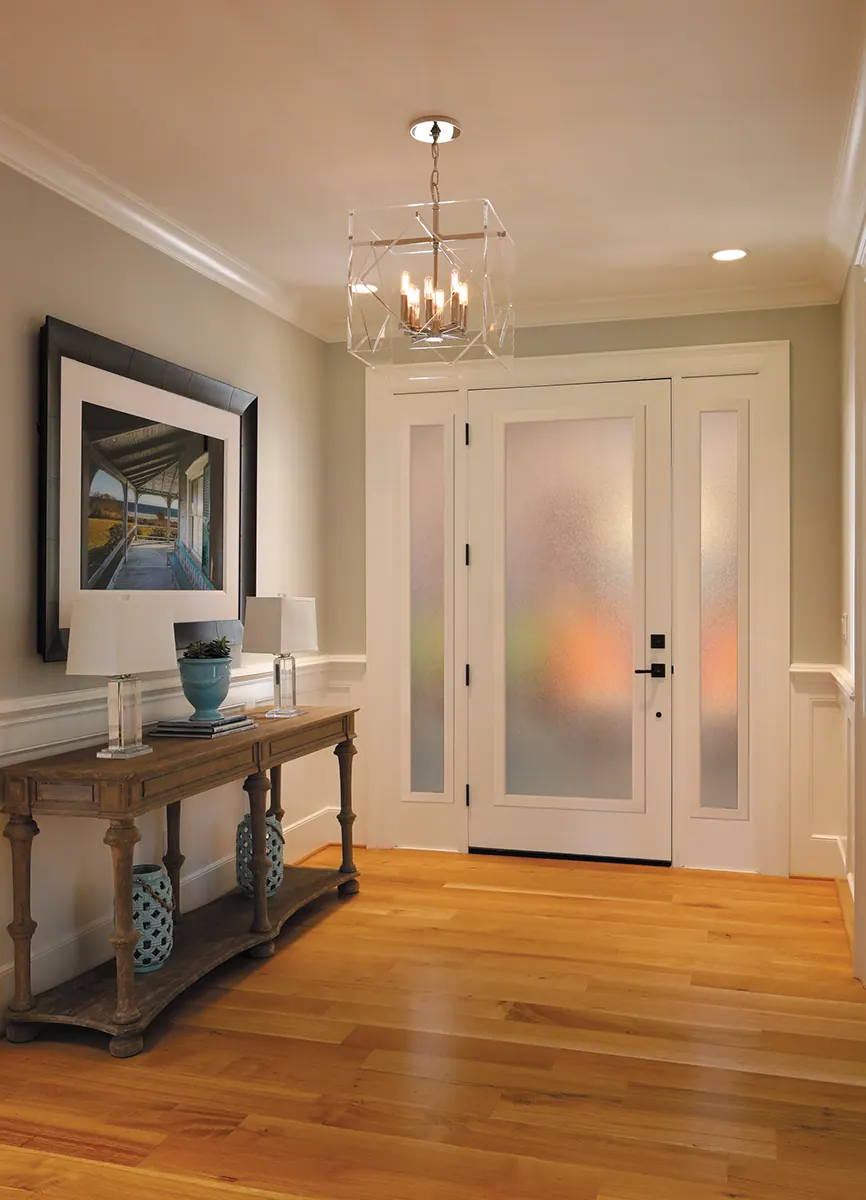
Front doors with glass panels and sidelights look great and let light into the hallway. The problem is that anyone at the door can see straight down your hallway into your home. Window film fixes that without replacing the glass. The main choice is between frosted film and privacy tint, and for most front doors, frosted film is the better option.
Here’s how they compare and which one suits your entry.
Why front door glass is a privacy problem
- Visitors, couriers and passers-by can see into the hallway and living areas
- At night, with lights on, the whole entry is on display
- Sidelights next to the lock show whether anyone is home
- Clear glass beside the door can be a security weak point
- Some homes have glass doors that look straight into a bedroom or bathroom
Option 1: frosted film
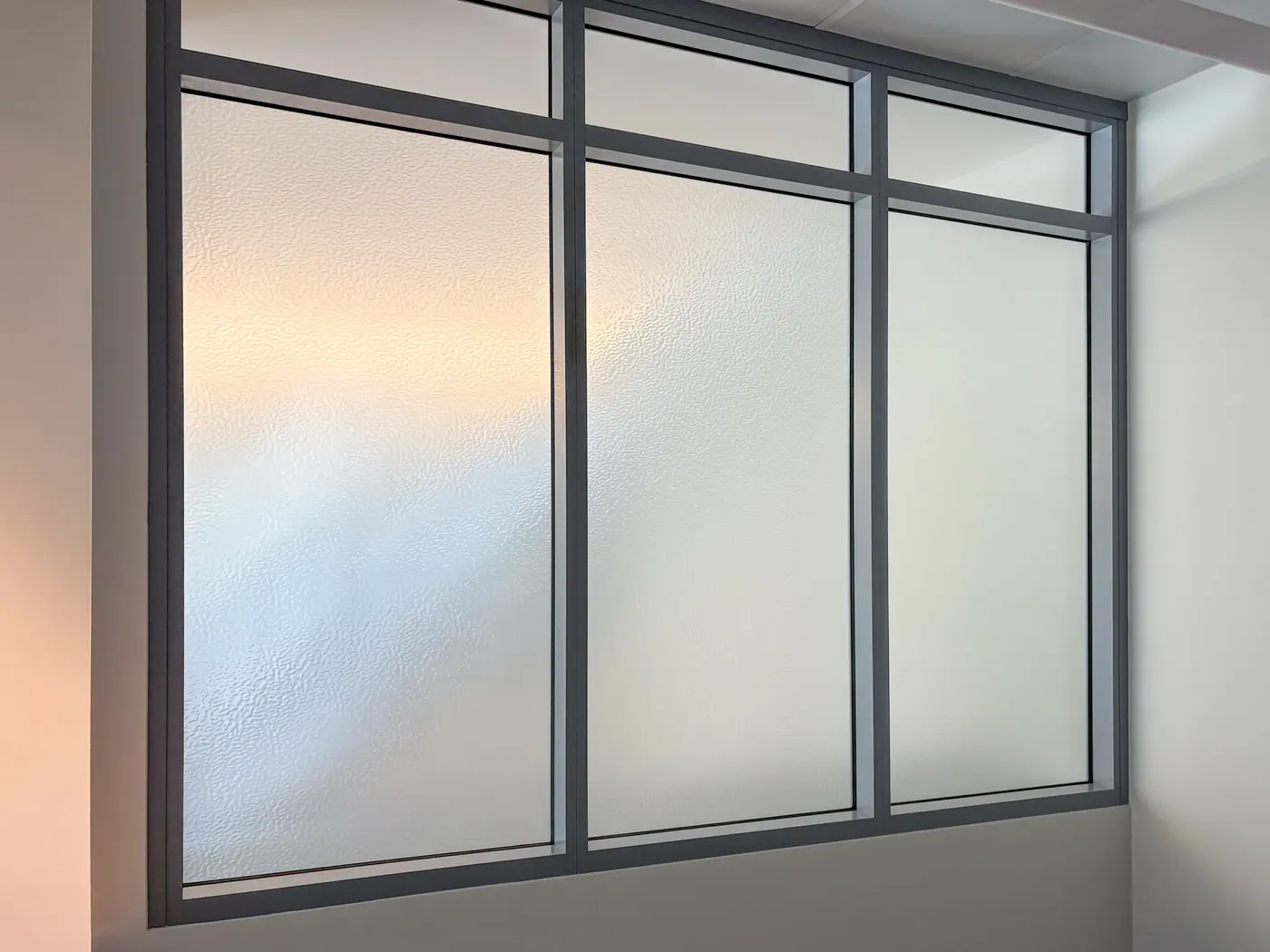
Frosted film gives the glass a sandblasted or etched look. Light still passes through, but the view is blurred in both directions.
Pros
- Privacy day and night. It doesn’t depend on which side is brighter.
- Keeps the hallway bright. Light still comes in, just softened.
- Neutral look that suits most homes and strata buildings
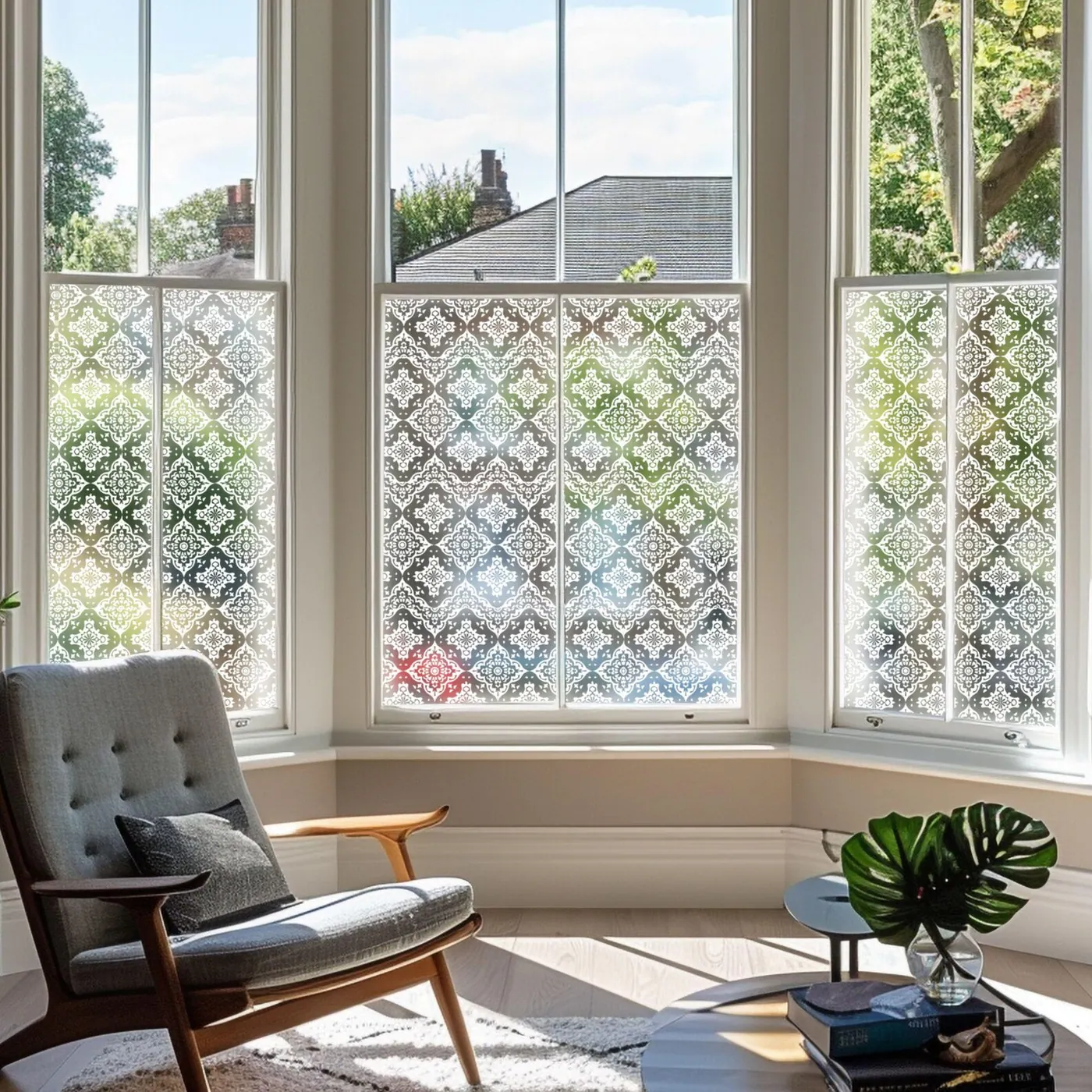
- Patterns available: plain frosting, bands, gradients, decorative designs and custom-cut house numbers
- Cheaper and quicker than replacing the glass with obscure glass
Cons
- No view out. You can’t see who’s at the door through the frosted area.
- Some people prefer the look of clear glass.
Tip: if you want to see who’s at the door, frost the glass but leave a clear strip at eye height, or frost only the lower part of the sidelights.
Option 2: privacy tint (reflective film)
Privacy tint is a reflective film. During the day, people outside see a mirror while you see out.
Pros
- You can see out during the day
- Rejects heat and blocks UV, useful on a sunny west-facing entry
- Looks sleek on modern homes
Cons
- Privacy reverses at night. With the hall light on, people can see in. See window film privacy day and night.
- Darker hallway, especially with stronger films
- Mirrored look may not suit the house or be allowed by strata
Option 3: blackout film
Black or white opaque film blocks all light and view. It’s rarely used on front doors because it makes the hallway dark, but it can suit a door that faces a garage or a storage room. See our blackout window film page.
Side-by-side comparison
| Frosted film | Privacy tint | Blackout film | |
|---|---|---|---|
| Privacy during the day | Yes | Yes | Yes |
| Privacy at night | Yes | No | Yes |
| Light into the hallway | Yes, softened | Yes, darker | No |
| You can see out | No | Yes, by day | No |
| Heat rejection | Some | High | High |
| Look from outside | Etched glass | Mirror | Solid black or white |
For a front door, privacy at night is usually what matters most, which is why frosted film is the most popular choice.
Adding security
The glass beside the lock is a common target, because breaking a sidelight can let someone reach in and open the door. Security film holds broken glass together so it can’t be quickly smashed out. It can be clear, or combined with frosting so you get privacy and security together. See does security window film stop break-ins?
What glass can be filmed?
Smooth glass: yes
Flat, smooth glass is ideal for any film.
Textured, reeded or leadlight glass: usually not
Film needs a smooth surface to bond to. Heavily textured, reeded or leadlight glass often isn’t suitable. If you want that look on smooth glass, decorative films can create a reeded or stained glass effect. See fluted, reeded and stained glass window film.
Laminated, toughened or double glazed glass
Most door glass in Australia is safety glass. Frosted film suits almost all of it. Darker and reflective films need checking on laminated and double glazed glass. See can you tint double glazed windows?
Other entry glass worth doing
While you’re doing the front door, consider:
- Glass panels beside the stairs or landing
- Bathroom windows facing the street or a neighbour. See the best privacy film for bathroom and bedroom windows.
- Garage access doors with glass panels
- Back doors and sliding doors. See tinting sliding glass doors.
Renting or in strata?
Frosted film is usually the easiest privacy film to get approved because it looks neutral from outside. In rentals you still need the landlord’s consent. See window tinting for rentals and can I tint my apartment windows?
How much does it cost?
Front doors and sidelights are small, so the job is usually quick. Window film in Sydney generally costs around $100 to $400 per square metre depending on the film, with custom designs priced separately. There’s no minimum charge. See how much window tinting costs in Sydney.
Choosing a frosted finish
Plain frosting isn’t the only option. Common choices for entries include:
- Full frosting: the whole pane frosted for maximum privacy
- Frosted band: a strip across the middle, at eye height, with clear glass above and below
- Bottom-up frosting: frosted from the floor to about 1.5 to 1.8 metres, so light comes in over the top
- Gradient film: fades from frosted to clear, which looks softer on modern doors
- Patterns: lines, dots and decorative designs
- House numbers: cut into frosted film on a sidelight or the glass above the door
Darker frost films are also available if you want a stronger privacy effect at night. The best way to choose is to hold a sample against your own glass, both during the day and with the hallway light on in the evening.
Looking after the film
Wait a few weeks after installation before cleaning, so the film can cure. After that, a soft cloth and mild soapy water is all you need. Avoid scrapers, abrasive pads and ammonia-based glass cleaners. Front doors get handled a lot, so keep keys and bags away from the filmed area where possible.
The bottom line
For most front doors and sidelights, frosted film is the better choice. It gives privacy day and night, keeps the hallway bright and looks neutral from the street. Privacy tint suits doors where you want to see out during the day and get heat rejection, but you’ll lose privacy at night. Add security film if the glass is next to the lock.
As a Solar Gard Authorised Dealer, we install frosted, privacy and security films across Sydney. See our frosted window film page, or send your door and sidelight sizes through the free quote form.