Fluted, Reeded & Stained Glass Window Film Guide
Fluted and reeded glass are everywhere in modern home design, from shower screens and kitchen cabinets to internal doors and office partitions. Stained glass has a timeless appeal in heritage homes and front doors. The problem is cost: replacing clear glass with fluted, reeded or real stained glass is expensive and disruptive.
That’s where fluted glass film, reeded glass film and stained glass window film come in. These decorative films give you the look of textured or coloured glass on your existing windows, along with privacy, at a fraction of the cost.
What is fluted glass film?
Fluted glass film is a decorative window film with a pattern of vertical ribs that copies the look of fluted glass. Depending on the product, the ribbed effect is either printed or embossed into the film, creating a convincing textured look.
Like real fluted glass, it:
- Blurs the view into shapes and light, giving privacy
- Lets light through, so rooms stay bright
- Adds a designer feature to plain glass
What is reeded glass film?
Reeded glass film creates the same ribbed effect. In practice, “fluted” and “reeded” are often used interchangeably. Traditionally, reeded glass has narrower, closer ribs, while fluted glass has wider, rounded grooves. Film ranges often offer several rib widths, so you can choose a fine reeded look or a bolder fluted look.
What is stained glass window film?
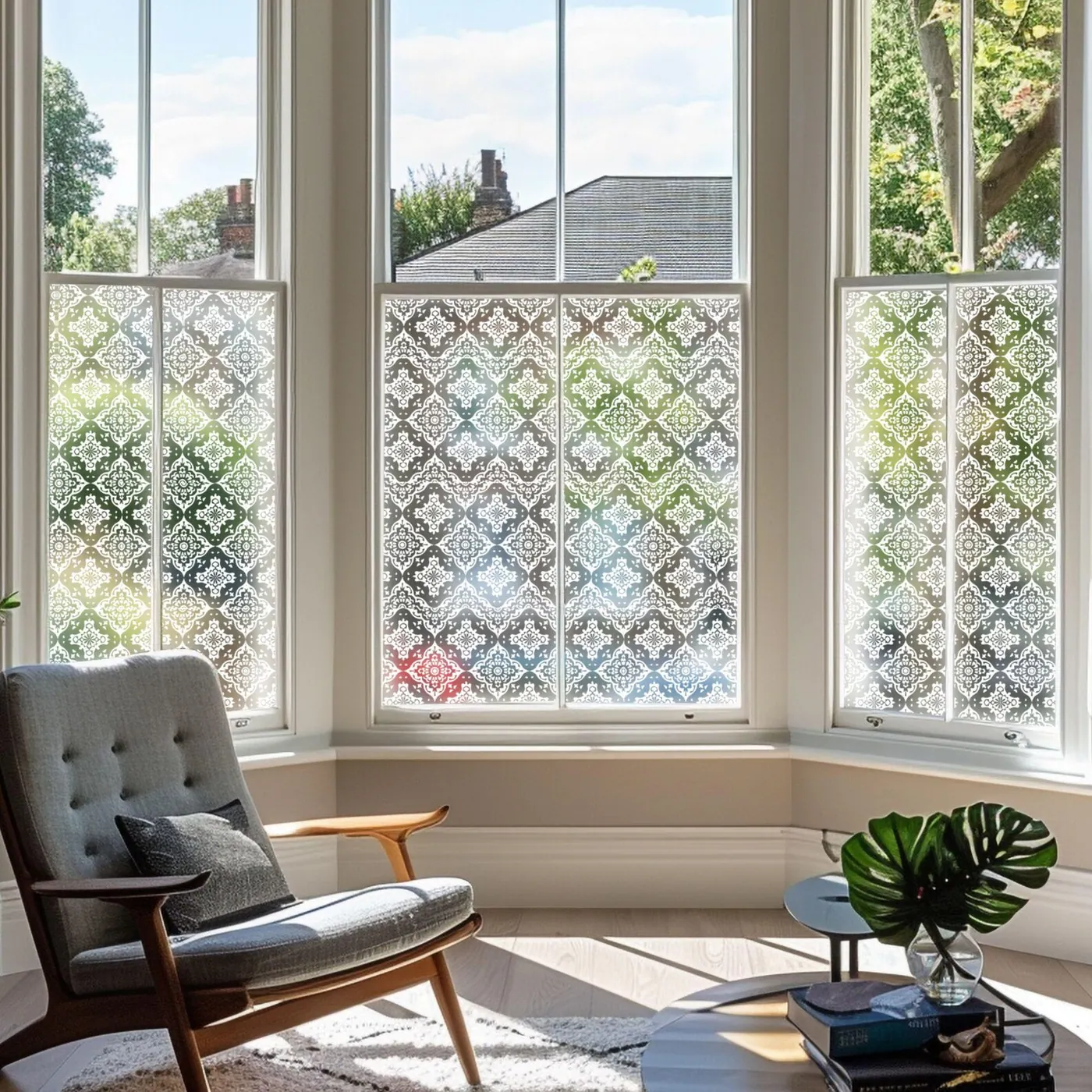
Stained glass window film is printed with translucent coloured designs that copy the look of leadlight or stained glass. Light shines through the colours just like real stained glass. Designs range from traditional leadlight patterns to modern geometric and abstract styles.
It’s popular for:
- Front door glass and sidelights
- Hallway and stairwell windows
- Bathroom windows in heritage homes
- Feature windows in cafés, churches and shops
Where to use fluted and reeded glass film
Bathrooms and en suites
Fluted film on a bathroom window or shower screen gives privacy with a modern look. See privacy film for bathroom and bedroom windows.
Internal doors and partitions
Glass doors between living areas, studies and laundries look great with reeded film. It softens the view without blocking light.
Kitchen cabinets
Glass-front cabinets with fluted film hide clutter while keeping the cabinet light and open.
Front doors and sidelights
Fluted, reeded or stained glass film adds privacy at the entrance and a feature look from the street.
Offices and meeting rooms
Reeded film on glass partitions gives meeting rooms privacy with a high-end finish. It’s a stylish alternative to standard frosted film. See our office window tinting page.
Shops, cafés and restaurants
Decorative film on windows and partitions creates atmosphere and screens back-of-house areas.
Decorative film vs replacing the glass
| Decorative film | New fluted / stained glass | |
|---|---|---|
| Cost | Much lower | High |
| Disruption | A few hours | Glass removal and replacement |
| Existing glass kept | Yes | No |
| Removable | Yes | No |
| Change the style later | Easy | Expensive |
| Safety | Adds a layer to the glass | Depends on the glass |
Privacy: how much do these films hide?
Fluted and reeded films blur shapes into soft vertical lines, so people and objects become unrecognisable but light and movement still show. That gives privacy day and night, because the effect doesn’t depend on light levels like tinted film does. We explain the difference in which window films give privacy day and night.
Stained glass film gives privacy depending on how dense the design is. Darker, busier designs hide more.
If you need complete privacy, combine decorative film with a frosted background, or use white opaque film. See privacy window film that still lets light in.
Static cling vs adhesive decorative film
You’ll see two types of decorative film:
- Static cling film holds on with static. It’s easy to put up and remove, but it can lift at the edges, collect dust and isn’t designed to last.
- Adhesive film is applied with a proper adhesive and installed like window tint. It lasts much longer, looks cleaner and stays put on large panes.
For a clean, long-lasting result, especially on doors, large panes and anything that gets wet, professional installation of adhesive film is the better choice. See Bunnings window film vs professional tinting.
Do decorative films reduce heat?
Most decorative films are designed for looks and privacy, not heat control. They block some UV and soften glare, but if heat is a problem, a solar control film will do much more. Layering films on the same glass isn’t always possible, so it’s best to decide on the priority for each window. See our heat reduction window film page.
Tips for choosing a decorative film
- Get a sample. Look at it on your glass in both daylight and lamplight.
- Think about rib direction. Vertical ribs make doors and windows look taller.
- Match the room. Fine reeded lines suit minimal interiors. Bold fluting suits feature walls.
- Check the glass. Like all films, decorative films need to suit your glass type.
- Consider coverage. Full coverage gives the most privacy, while partial coverage keeps a view above or below.
Caring for decorative film
Decorative film is easy to look after:
- Wait until the film has fully cured before cleaning
- Clean with mild soapy water and a soft cloth or squeegee
- Avoid abrasive pads, blades and harsh chemicals
- On textured films, wipe along the ribs rather than across them
With the right care, a professionally installed decorative film keeps its look for many years.
Combining decorative film with other films
Many homes use decorative film on some glass and solar film on others. For example, fluted film on a bathroom window and front door sidelights, with heat reduction film on the living room sliding doors. That way each window gets the film that suits its job.
How decorative film is installed
Professional installation of decorative film follows the same steps as window tinting:
- The glass is cleaned thoroughly, including the edges.
- The film is cut to size, with patterns and ribs aligned so they run straight.
- The film is applied with a slip solution so it can be positioned precisely.
- It’s squeegeed out and trimmed tight to the frame.
- The film cures over the following days.
Alignment matters much more with patterned film than plain film. Ribs that run slightly crooked, or patterns that don’t line up across neighbouring panes, are very noticeable. That’s one of the main reasons to have decorative film professionally installed.
The bottom line
Fluted glass film, reeded glass film and stained glass window film give you a designer look and privacy without the cost of replacing glass. They suit bathrooms, internal doors, partitions, cabinets and front entrances, and they can be removed if your style changes.
We can source decorative fluted, reeded and stained glass films on request and install them across Greater Sydney, Wollongong and Wollondilly. Explore our frosted window film and privacy window film pages, or send your glass sizes and the look you’re after through the free quote form.