Privacy Window Film That Still Lets Light In: Your Options
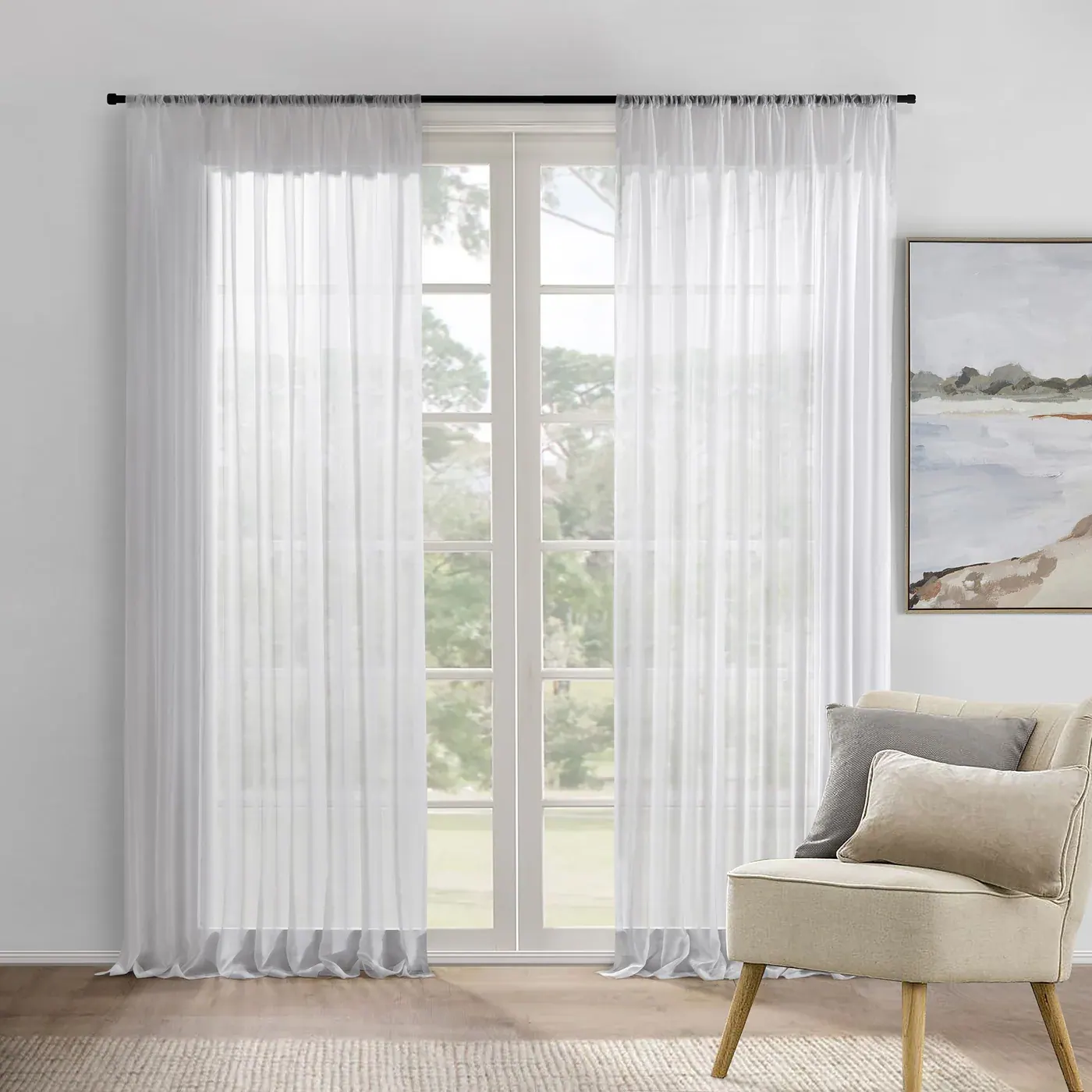
Curtains and blinds give privacy, but they also block your light and your view. That’s why so many people search for privacy window film that lets light in. The good news is that window film can give you privacy and keep your rooms bright. The right film depends on one question: do you still want to see out?
- If you want to see out and stop people seeing in, choose a reflective privacy film.
- If you only care about light and don’t need to see out, choose a frosted film.
This guide explains both, how they work and where each one fits.
Option 1: Reflective privacy film (keep your view)
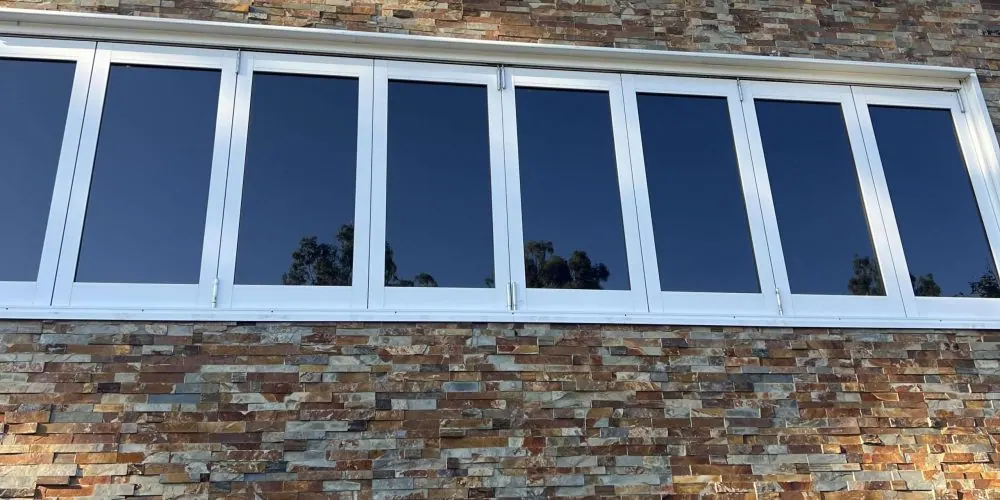
Reflective window film is the go-to choice when you want privacy and natural light without losing your view. During the day, people outside see a reflection while you see out through a lightly tinted view. It’s often called one way film or mirror film.
How it works
Reflective film works on light levels. Whichever side of the glass is brighter sees a mirror, and the darker side sees through. During the day it’s brighter outside, so the street sees a reflection and you see out.
How much light does it let in?
That depends on the film you choose. Official Solar Gard figures on 6mm clear glass:
| Film | Light let in | Reflect. outside | Privacy level |
|---|---|---|---|
| Sterling 50 | 49% | 25% | Light, subtle |
| Silver 35 | 33% | 39% | Medium |
| TrueVue 30 | 31% | 22% | Medium |
| TrueVue 15 | 12% | 44% | High |
| Silver 20 | 16% | 57% | Very high |
A lighter film keeps rooms brighter but gives less privacy. A darker, more reflective film gives more privacy but makes the room a little darker. Most homes find TrueVue 30 or Silver 35 a good balance.
Bonus: heat and glare
Reflective privacy films are also some of the best heat reduction films available. The same film that gives privacy can reject 60–77% of the sun’s energy and cut glare. See does window tint really reduce heat in a house?
The catch: night time
At night, when your lights are on and it’s dark outside, the inside is brighter and people can see in. Reflective film gives daytime privacy only, so you’ll still want curtains or blinds at night. We explain this fully in which window films give privacy day and night.
Best for: living rooms, street-facing windows, sliding doors, offices and anywhere you want privacy and a view.
See our one way mirror window film page for more detail.
Option 2: Frosted film (light in, no view)
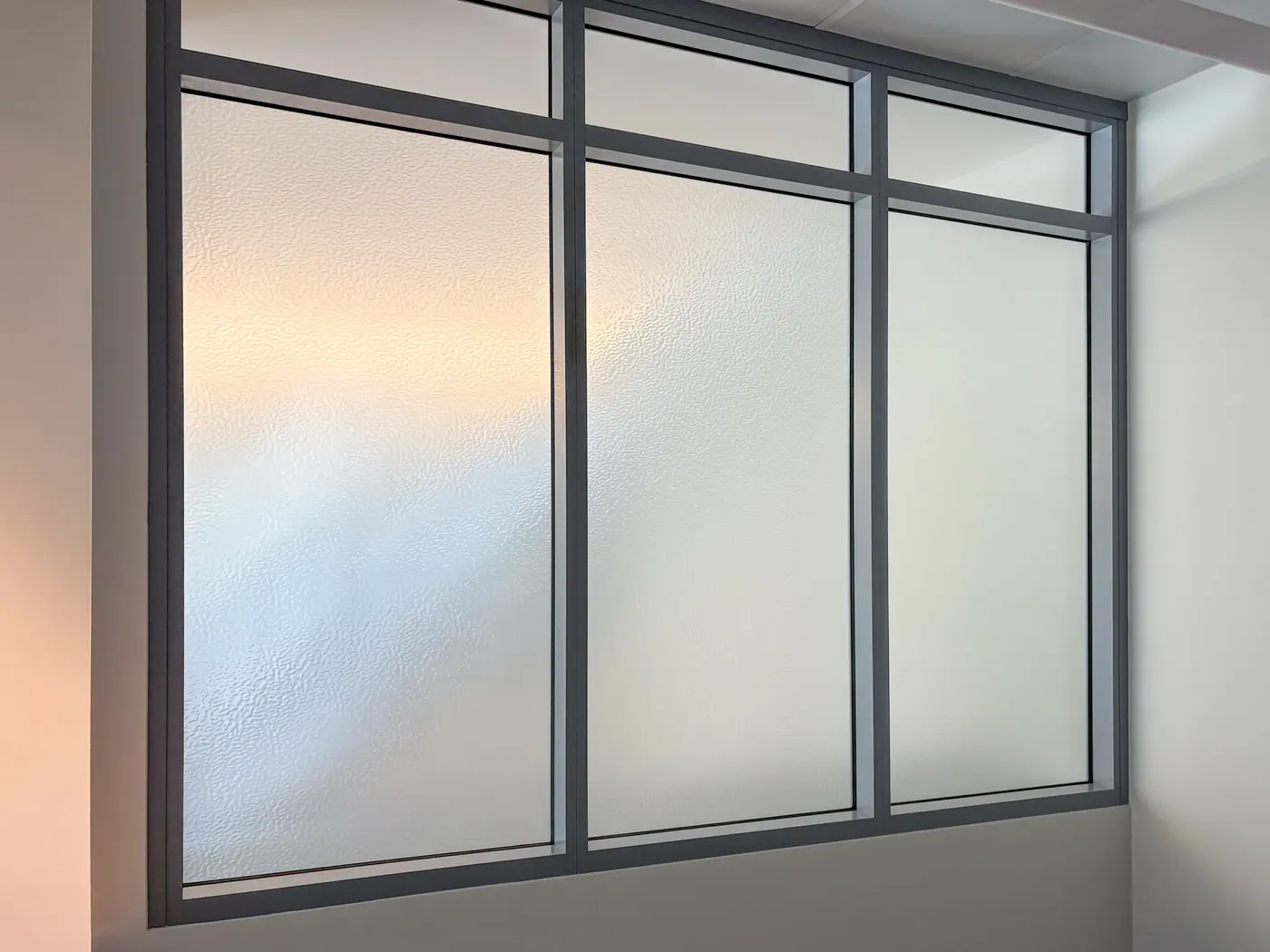
Frosted film is the other privacy window film that lets light in. It gives the look of sandblasted or etched glass. It lets light through but scatters it, so nobody can see clearly through the glass from either side.
How much light does it let in?
Frosted films are translucent, so rooms stay bright with soft, even light. There’s no mirror effect, and the glass looks the same from inside and outside.
The advantage: privacy day and night
Because frosted film blurs the view both ways, it gives the same privacy at night as during the day. You don’t need to rely on curtains.
The catch: no view
You won’t be able to see out either. That’s why frosted film suits windows where the view doesn’t matter.
Best for: bathrooms, toilets, laundries, front door sidelights, office partitions, meeting rooms and clinics.
See our frosted window film page for options.
Reflective vs frosted at a glance
| Reflective privacy film | Frosted film | |
|---|---|---|
| Lets light in | Yes (12–50%, depending on film) | Yes (soft, diffused light) |
| You can see out | Yes | No |
| Privacy during the day | Yes | Yes |
| Privacy at night | No | Yes |
| Reduces heat | Yes, strongly | A little |
| Look from outside | Mirror | Frosted glass |
Other options worth knowing
Decorative and patterned film
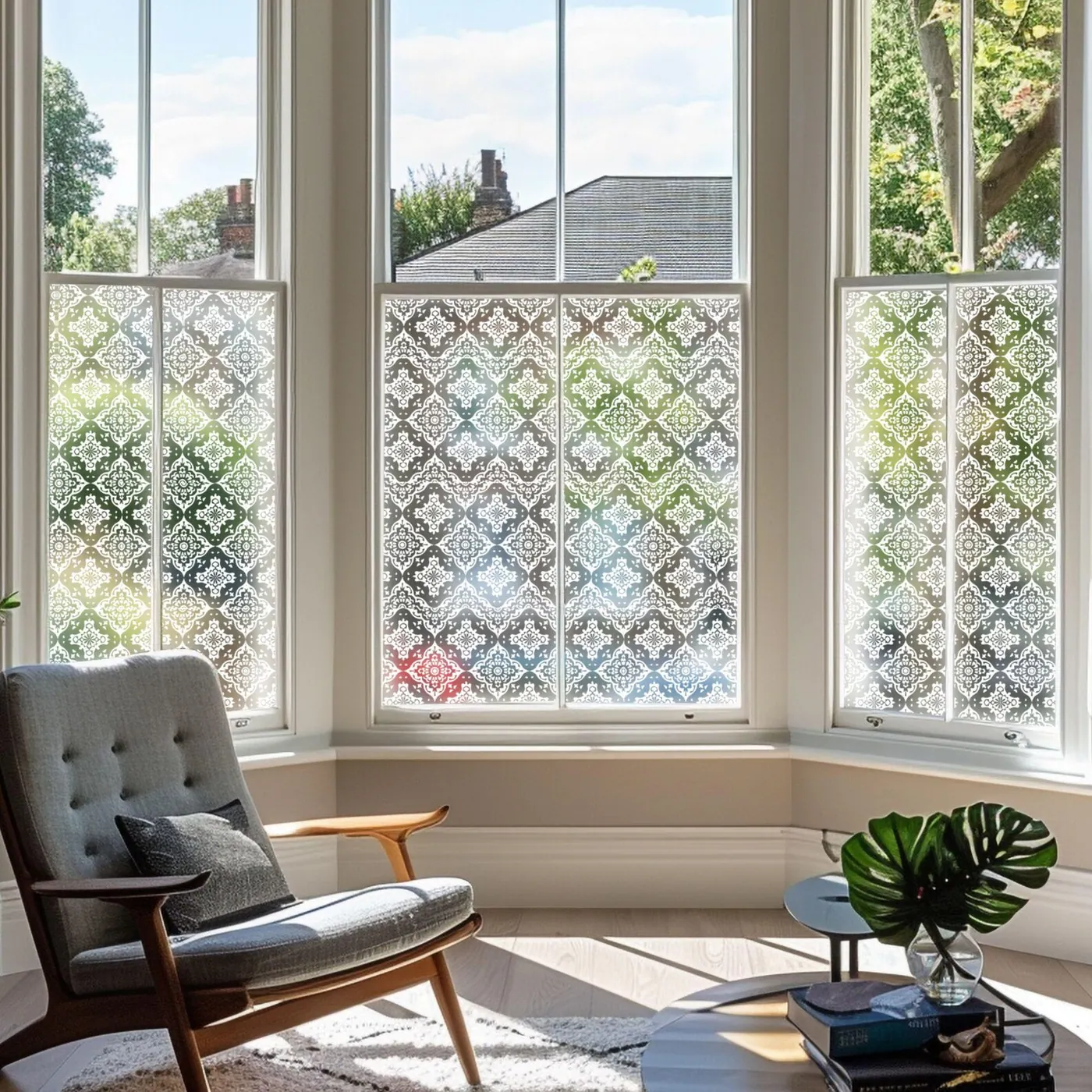
If you want privacy and a feature look, decorative films like fluted, reeded and patterned designs blur the view while letting light through. Read about fluted, reeded and stained glass window film.
Gradient and partial frosting
You don’t have to cover the whole window. Frosting just the lower half of a window or a band across a glass partition gives privacy where you need it and keeps the view above eye level.
Blackout film
If you need total privacy and don’t need light, blackout window film in black or white blocks the view completely. White blackout film still lets a soft glow through.
How to choose
Ask yourself three questions:
- Do I need to see out of this window? Yes → reflective. No → frosted.
- Do I need privacy at night without curtains? Yes → frosted. No → reflective is fine.
- Is heat a problem in this room? Yes → reflective film does both jobs.
Many homes end up using both: reflective film on living areas and sliding doors, and frosted film on bathrooms and side windows. Our guide to privacy film for bathroom and bedroom windows goes into this in more detail.
Room-by-room suggestions
Here’s which privacy window film that lets light in usually works best in each room:
| Room | Usual choice | Why |
|---|---|---|
| Living room | Reflective or dual reflective | Keeps the view, cuts heat and glare |
| Street-facing windows | Reflective | Daytime privacy without curtains |
| Sliding doors | Reflective | Privacy plus heat control on large glass |
| Bathroom and toilet | Frosted | Privacy day and night, light in |
| Bedroom | Frosted or dark reflective | Depends on whether you want the view |
| Front door sidelights | Frosted or decorative | Privacy at the entrance |
| Home office | Light reflective or neutral | Cuts glare, keeps it bright |
| Office partitions | Frosted or white opaque | Privacy inside the workplace |
Questions we’re often asked
Does reflective privacy film make the room dark? It depends on the film. Lighter films like Sterling 50 let in about half the light and still give privacy on bright days. Darker films give more privacy but make the room dimmer.
Can I see out of frosted film? Not clearly. You’ll see light, shapes and movement, but no clear view.
Can I mix both films in one room? Yes. Frosted on a side window and reflective on the main window is a common combination.
Professional installation matters
Privacy films need a clean, tight fit to the frame. Gaps at the edges are where people can see through. Professional installation gives you a neat finish and a manufacturer warranty. As a Solar Gard Authorised Dealer, we install every type of privacy window film that lets light in across Greater Sydney, Wollongong and Wollondilly.
Explore our privacy window film options, or send your glass sizes through the free quote form and tell us which rooms you’re looking at.