Office Window Tinting: How to Stop Glare on Screens

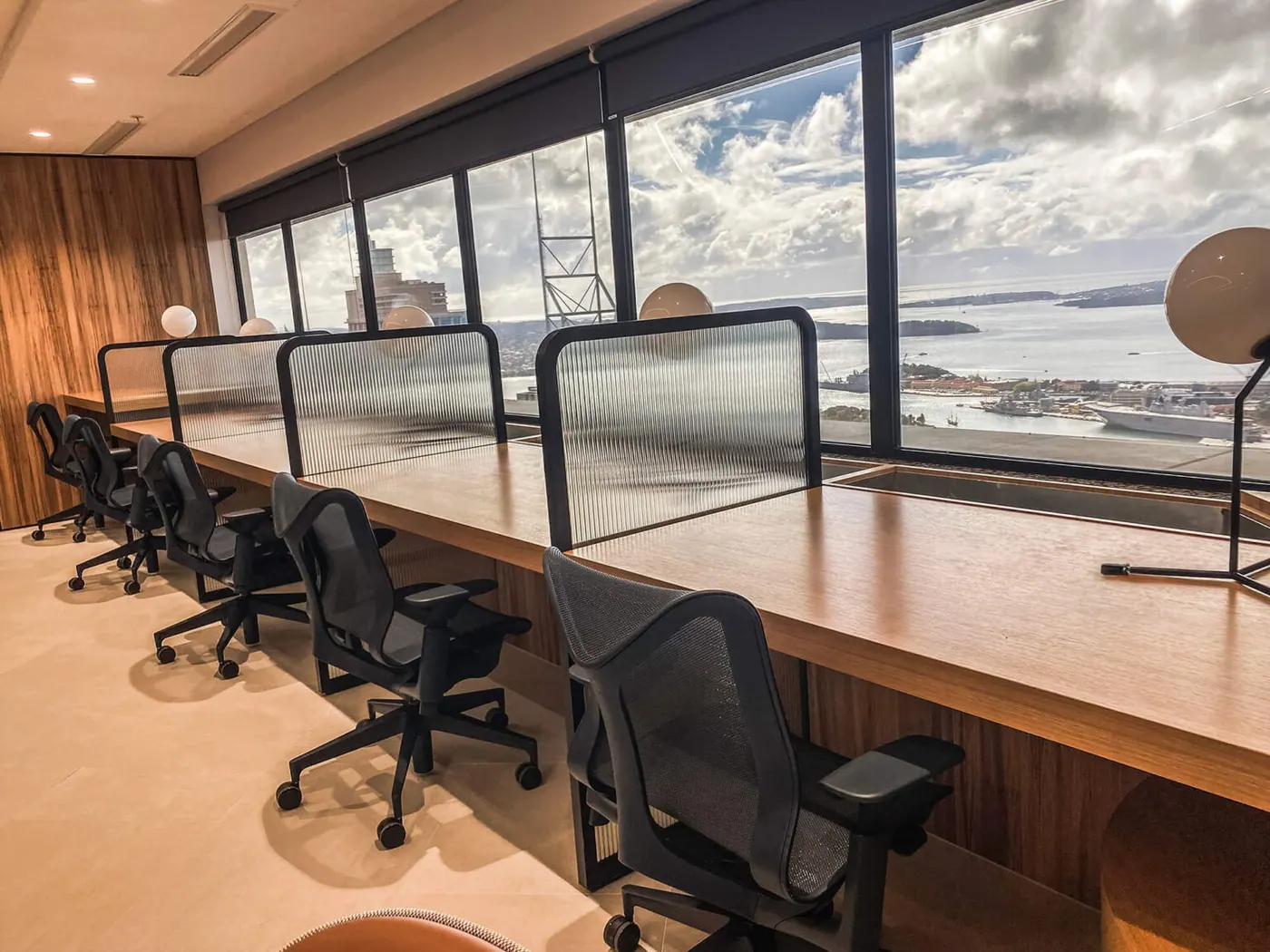
Glare is one of the most common complaints in offices. Sun streams across a desk, staff tilt their screens, close the blinds and turn the lights on, and the office feels dim and stuffy for the rest of the day. Office window tinting is the best way to reduce glare without losing daylight or your view.
Every window film has its own glare reduction rating, so the trick is choosing the right one for your office. This guide explains how office window tinting stops glare on screens, how to read glare ratings, and which films suit different workplaces.
Why glare is such a problem in offices
Glare happens when there’s too much brightness in your field of view. In offices, it shows up as:
- Washed-out screens that are hard to read
- Reflections of windows on monitors
- Eye strain and headaches from squinting all day
- Hot spots at desks near the windows
- Blinds closed all day, with lights on and no view
It’s worse in buildings with large glass facades, west or north-facing windows, and open-plan layouts where desks sit near the glass.
How office window tinting reduces glare
Window film reduces the amount of visible light coming through the glass. Less light means less brightness at the window and fewer reflections on screens. The darker the film, the more glare it cuts.
Film manufacturers publish a glare reduction figure that shows how much the film reduces visible light compared with untreated glass.
Glare reduction ratings: official Solar Gard figures
On 6mm clear glass:
| Film | Visible light | Glare reduction | Heat rejected |
|---|---|---|---|
| Ceramic CX 60 | 61% | 31% | 40% |
| Ceramic CX 50 | 50% | 44% | 48% |
| Sterling 50 | 49% | 45% | 56% |
| Stainless Steel 35 | 37% | 58% | 51% |
| Ceramic CX 35 | 37% | 58% | 58% |
| TrueVue 30 | 31% | 65% | 61% |
| Stainless Steel 20 | 23% | 74% | 61% |
| TrueVue 15 | 12% | 87% | 77% |
Light films around 50–60% light are good for offices that only get mild glare. Medium films around 30–40% suit most offices with direct sun. Dark films are for severe glare, west-facing glass, or where privacy is also needed.
Choosing the right film for your office
Mild glare, keep it bright
Light films like Ceramic CX 50 or Ceramic CX 60 cut glare while keeping the office bright and natural-looking from outside. Good for offices with indirect sun or deep eaves.
Direct sun on screens
Medium films around 30–40% light, such as Ceramic CX 35, Stainless Steel 35 or TrueVue 30, give a clear reduction in glare without making the office feel dark. This is where most office jobs end up.
Severe glare or west-facing glass
Darker films like Stainless Steel 20 or TrueVue 15 handle strong afternoon sun and give daytime privacy too. Useful for ground-floor offices facing the street.
Building appearance
If the building owner or strata limits reflective films, choose low-reflective films like Ceramic CX. See ceramic vs reflective window film.
More than glare: other benefits for offices
- Heat reduction. The same film that cuts glare also rejects solar heat, reducing hot spots and air conditioning load. See the best window film for heat reduction.
- Comfort and productivity. Fewer complaints, fewer blinds down, more natural light.
- Privacy. Reflective films stop people seeing in from the street. White opaque or frosted film gives privacy on internal glass partitions and meeting rooms.
- UV protection. More than 99% of UV blocked, protecting carpets and furniture.
- A uniform look. Film can give a building a consistent appearance from outside.
Glare and heat on the same window
In many offices, glare and heat come from the same windows. A good office film handles both. For example, TrueVue 30 cuts glare by 65% and rejects 61% of solar energy. That’s why we look at glare, heat and the look of the building together when recommending a film.
Minimising disruption
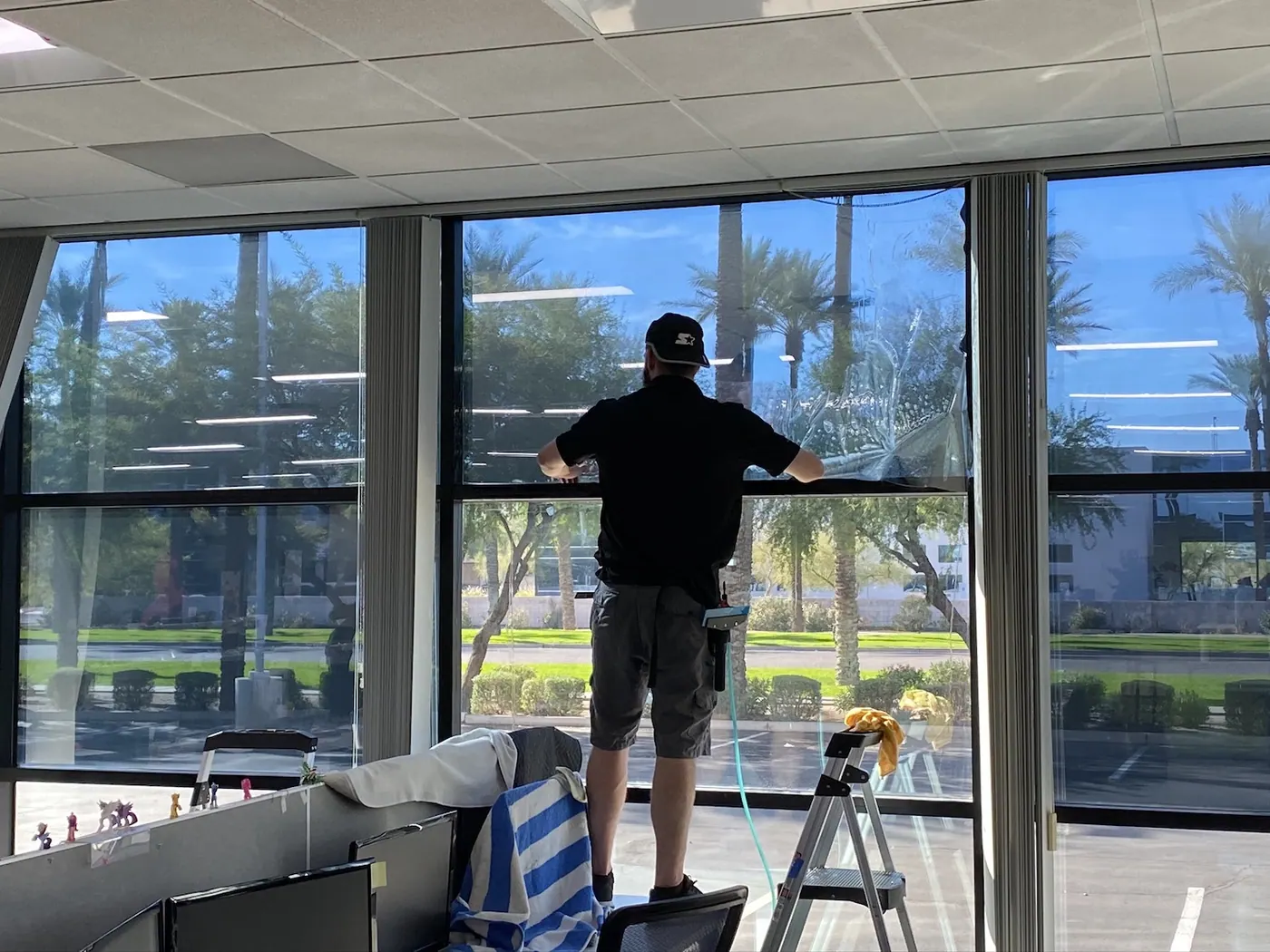
Office window tinting doesn’t have to interrupt your business. We can:
- Work after hours or on weekends
- Tint in stages, floor by floor or room by room
- Keep desks and equipment protected while we work
- Coordinate with building managers for access and approvals
What does office window tinting cost?
Office window tinting is priced per square metre and per job, depending on the film, access and the size of the job. Larger office jobs usually cost less per square metre than small ones. See how much window tinting costs in Sydney.
Signs your office needs window film
- Blinds are closed on sunny days
- Staff move or tilt screens to avoid reflections
- Desks near windows are too hot in the afternoon
- The air conditioning struggles on sunny days
- People complain of eye strain or headaches
How we assess an office for glare
When we look at an office, we check:
- Window orientation. Which windows get direct sun, and when.
- Desk layout. Where screens face relative to the windows.
- Existing glass. Tinted, Low-E or double glazed glass changes which films are safe.
- Building rules. Whether the building manager or strata limits reflective or dark films.
- Lighting. How bright the office needs to be for the work being done.
- Privacy needs. Street-level offices, meeting rooms and consulting rooms.
From there we recommend one film or a mix, for example a darker film on the west side and a lighter film on the east.
Glare in other workplaces
Glare isn’t only an office problem. We also see it in:
- Medical and dental clinics, where screens and treatment areas need even light
- Schools and childcare centres, where interactive screens and whiteboards wash out
- Reception areas, where staff face large glass entries all day
- Retail counters and showrooms, where screens and displays face shopfront glass
- Warehouses and factories with office mezzanines facing big windows
The approach is the same: choose a film with the right glare reduction for the amount of sun, while keeping enough light for the space to work. See our commercial window tinting page.
The bottom line
Office window tinting is the most effective way to reduce glare on computer screens while keeping natural light and your view. Every film has its own glare reduction rating, from around 30% for light films to over 85% for dark films, so the right choice depends on how much sun your office gets and how bright you want it to stay.
As a Solar Gard Authorised Dealer, we tint offices across Greater Sydney, Wollongong and Wollondilly. Explore our office window tinting, anti-glare window film and commercial window tinting pages, or send your glass sizes through the free quote form.