
Solar Gard Slate Window Film
Dual-reflective film with a modern dark grey look: reflective outside to reject heat, neutral inside to keep your view.
- Up to 76%Solar energy rejected
- Up to 88%Fade reduction
- >99%UV blocked
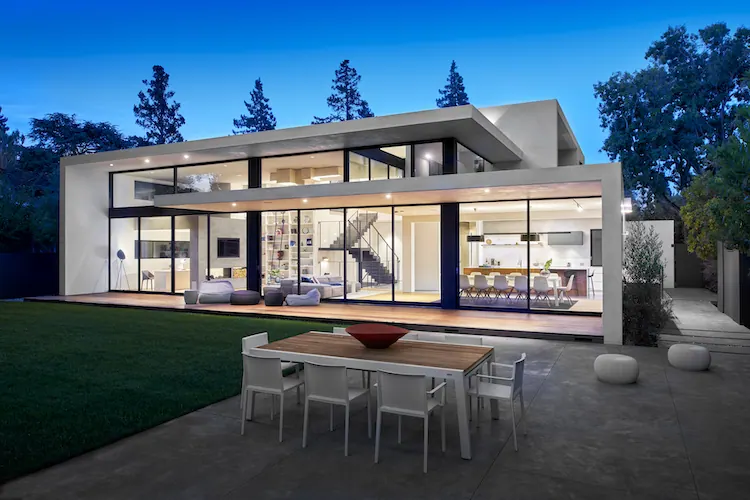
What Is Slate?
Slate is a dual-reflective film. The outside face reflects heat away, while the inside face has much lower reflectance, so you keep a clear view out, especially at night.
It has a modern dark grey look that suits contemporary homes and offices. Slate 10 rejects 76% of solar energy, close to the best in the range.
Slate comes in four shades, from the dark Slate 10 to the lighter Slate 40.
Warranty: Solar Gard manufacturer warranty, terms confirmed in your quote.
Great for
- Modern homes with large glass
- Hot west and north-facing rooms
- Daytime privacy with a clear night view
- Rooms with screen glare
Think twice if
- You don’t want a reflective look from outside
- Your strata restricts reflective film
- You want rooms to stay very bright (choose Slate 40 or a lighter series)
Slate Specifications
All 4 shades compared side by side. Lower VLT means a darker film; higher TSER means more heat rejected.
| Specification | Slate 10 | Slate 20 | Slate 30 | Slate 40 |
|---|---|---|---|---|
| Visible light transmittance (VLT) | 13% | 23% | 30% | 44% |
| Visible light reflectance, exterior | 45% | 31% | 24% | 18% |
| Visible light reflectance, interior | 23% | 17% | 14% | 12% |
| Total solar energy rejected (TSER) | 76% | 68% | 62% | 53% |
| Solar heat gain coefficient (SHGC) | 0.24 | 0.32 | 0.38 | 0.47 |
| UV light blocked (300 to 380 nm) | >99% | >99% | >99% | >99% |
| Glare reduction* | 85% | 74% | 66% | 51% |
| Fade reduction | 88% | 78% | 72% | 61% |
Source: Solar Gard official product data. Results calculated using NFRC methodology and LBNL Window software on 6mm clear glass, subject to normal manufacturing variances and intended for estimating purposes. *Glare reduction calculated against untreated 6mm clear glass.
Which Slate Shade Is Right For You?
Slate 10
13% VLT, 76% heat rejection and 88% fade reduction. Maximum heat, glare and privacy control.
Slate 20
23% VLT and 68% heat rejection. Strong performance with a bit more light.
Slate 30
30% VLT and 62% heat rejection, with 24% exterior reflectance.
Slate 40
44% VLT and 53% heat rejection. The lightest Slate with only 18% exterior reflectance.
Estimate Your Savings With Slate
Use our free calculator to estimate heat reduction, glare reduction and cooling savings for your home with Slate.
Slate vs TrueVue
Both are dual-reflective films with similar performance. TrueVue 15 rejects 77% of heat at 12% VLT, while Slate 10 rejects 76% at 13% VLT.
The main difference is the look. Slate has a darker grey tone. We can show you samples of both on your glass.
Compare With TrueVueSlate FAQs
What does dual-reflective mean?
The film is reflective on the outside to reject heat, and much less reflective on the inside so you can see out clearly, especially at night.
Does Slate give privacy?
Yes, during the day. At night, when it is brighter inside, people can see in, as with any film.
Which Slate shade is best?
Slate 20 or 30 suits most living areas. Slate 10 is for maximum heat and privacy, Slate 40 for keeping more light.
Can Slate go on double glazing?
Sometimes. Darker reflective films raise glass temperature, so we check your glass type before recommending Slate.
Get A Free Slate Quote
Send us your glass sizes and we’ll recommend the right Slate shade.